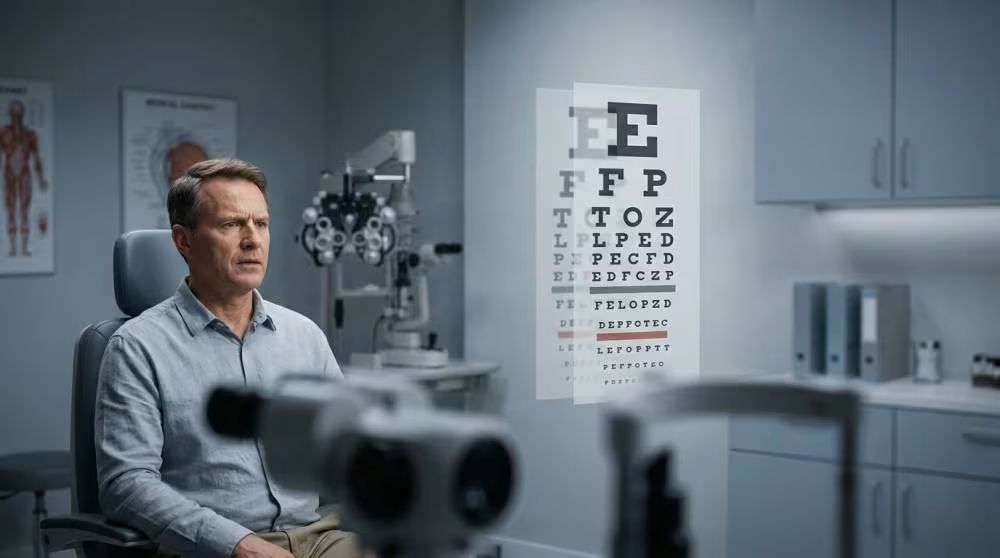

Cataracts are one of the most common causes of vision changes as we age. Fortunately, cataract surgery is also one of the most successful and frequently performed procedures in medicine. As an ophthalmologist, I spend a great deal of time helping patients understand what cataracts are, when surgery is appropriate, and what they can expect before, during, and after the procedure. For many people, cataract surgery can significantly improve vision and quality of life
This article provides an overview of cataracts and cataract surgery to help you better understand the process.
What Is a Cataract?

Inside the eye is a natural lens that helps focus light onto the retina, the light-sensitive tissue in the back of the eye. When we are young, this lens is clear and flexible, allowing us to see sharply.
Over time, the proteins within the lens begin to change, causing the lens to gradually become cloudy. This clouding of the lens is called a cataract.
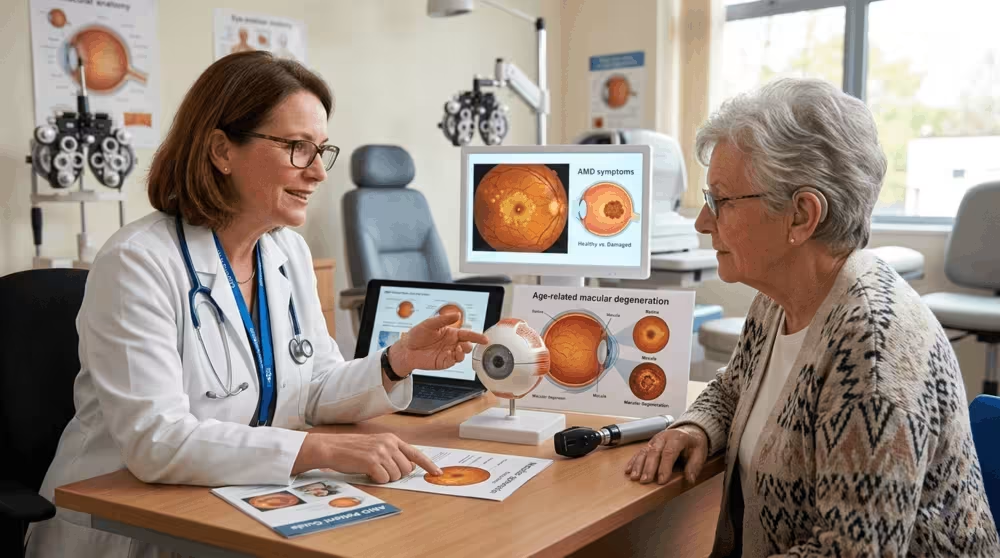
AMD generally develops slowly over time and becomes more common with age. Risk factors include aging, genetics, smoking, cardiovascular disease, and sometimes diet.
Common symptoms of cataracts include:
- Blurry or hazy vision
- Difficulty seeing at night
- Increased sensitivity to glare or bright lights
- Halos around lights
- Colors appearing faded or yellowed
- Frequent changes in glasses prescription
Cataracts typically develop slowly over many years. In the early stages, vision changes may be mild and manageable with updated glasses or improved lighting. However, as the cataract progresses, vision can become increasingly impaired.
When Is Cataract Surgery Recommended?
Cataract surgery is generally recommended when the cataract begins to interfere with daily activities or quality of life.
For some patients, this may include difficulty with:
- Driving, especially at night
- Reading or working on a computer
- Watching television
- Recognizing faces
- Performing hobbies or detailed tasks
Importantly, cataracts do not need to reach a certain “stage” before surgery is considered. The decision is based primarily on how much the cataract affects your vision and your daily functioning.
There are also some medical situations where cataract surgery may be recommended sooner. For example, a cataract may interfere with the monitoring or treatment of other eye conditions such as glaucoma, macular degeneration, or diabetic retinopathy.
How Cataract Surgery Works

Cataract surgery involves removing the cloudy natural lens and replacing it with a clear artificial lens called an intraocular lens (IOL).
The most common technique used today is called phacoemulsification, in which a tiny ultrasound device breaks the cataract into small fragments that are gently removed through a very small incision. A folded artificial lens is then inserted through the same incision and positioned inside the eye.
The incision is typically so small that stitches are not required.
Lens Options for Cataract Surgery
One of the advantages of modern cataract surgery is that patients have several options when it comes to intraocular lenses.
Monofocal Lenses
Monofocal lenses are the most commonly used IOLs. They provide clear vision at one primary distance – usually set for distance vision.
Most patients with monofocal lenses still require reading glasses for near tasks such as reading or using a smartphone.
Astigmatism-Correcting (Toric) Lenses
Some patients have significant astigmatism, which is caused by an irregular curvature of the cornea. Toric lenses are designed to reduce or eliminate this astigmatism, improving the quality of distance vision and reducing dependence on glasses.
Multifocal and Extended Depth-of-Focus Lenses
Premium lenses such as multifocal or extended depth-of-focus (EDOF) lenses are designed to provide a range of vision, including distance and near. These lenses can reduce dependence on glasses for many activities.
However, they are not ideal for every patient. Some individuals may notice side effects such as halos or glare around lights at night. Careful patient selection and discussion are important when considering these options.
During your cataract consultation, your ophthalmologist will review your eye health, visual goals, and lifestyle to help determine which lens option is most appropriate for you.
Light Adjustable Lens
The Light Adjustable Lens (LAL) is an intraocular lens implanted during cataract surgery whose power can be precisely adjusted afterward using targeted ultraviolet light treatments. This allows the surgeon to fine-tune the patient’s vision postoperatively, improving refractive accuracy and reducing dependence on glasses compared with traditional fixed-power lenses.
How Safe Is Cataract Surgery?

Cataract surgery is widely considered one of the safest and most successful surgical procedures performed today.
Millions of cataract surgeries are performed each year worldwide. In the vast majority of cases, patients experience significant improvement in vision.
That said, as with any surgical procedure, there are potential risks. These are uncommon but can include:
- Infection
- Inflammation
- Swelling of the retina
- Retinal detachment
- Residual refractive error requiring glasses or additional treatment
Serious complications are rare, especially when surgery is performed by an experienced ophthalmic surgeon and patients follow postoperative instructions carefully.
How Long Does the Surgery Take?
The surgical portion of cataract surgery is relatively quick. In most cases, the procedure itself takes about 10 to 15 minutes per eye.
However, you should plan to spend a few hours at the surgery center. This time includes:
- Preoperative preparation
- Administration of numbing medication
- The surgical procedure
- Recovery and monitoring afterward
Cataract surgery is usually performed one eye at a time, with the second eye scheduled at a later date if needed.
What to Expect on the Day of Surgery
On the day of surgery, patients typically arrive at the surgery center about an hour before the procedure.
Several steps occur before surgery begins:
- Check-in and preparation – Your medical team will review your medications and medical history.
- Eye drops – Dilating and antibiotic drops are placed in the eye.
- IV placement – A small IV may be placed to administer mild sedation.
Most patients remain awake during the procedure but receive relaxing medication to help them stay comfortable. The eye itself is numbed with drops or local anesthesia, so patients typically feel little or no pain during the surgery. During the procedure, you may see bright lights or movement, but the experience is generally not uncomfortable. After surgery, a protective shield is placed over the eye, and patients rest briefly in the recovery area before going home. Because of the sedation used, someone else must drive you home.
Recovery and After-Surgery Care
Recovery from cataract surgery is usually smooth and relatively quick.
Most patients notice improvement in their vision within a few days, although it can take several weeks for vision to fully stabilize.
After surgery, patients are typically prescribed antibiotic and anti-inflammatory eye drops to help prevent infection and reduce inflammation.
Some general postoperative guidelines include:
- Avoid rubbing the eye
- Wear the protective shield at night for the first week
- Avoid heavy lifting or strenuous activity for several days
- Avoid getting water directly in the eye during the early recovery period
Follow-up visits are scheduled to monitor healing, usually the day after surgery and again in the following weeks.
Most patients are able to return to many normal activities within a few days.
The Bottom Line
Cataract surgery is a highly effective procedure that can restore clarity of vision and significantly improve quality of life.
Modern surgical techniques and advanced intraocular lens options allow cataract surgery to be tailored to each patient’s visual needs and goals. While no surgery is completely risk-free, cataract surgery has an excellent safety record and very high patient satisfaction.
If you are experiencing symptoms of cataracts – such as blurry vision, glare, or difficulty seeing at night – it may be helpful to schedule a comprehensive eye examination. An ophthalmologist can determine whether cataracts are affecting your vision and discuss whether surgery might be appropriate.
For many patients, cataract surgery offers the opportunity to see the world clearly again.